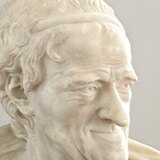

Voltaire in Ferney: the man, his work, his home
Philosopher, writer, defender of the persecuted and builder: discover who Voltaire was before you step inside his house.
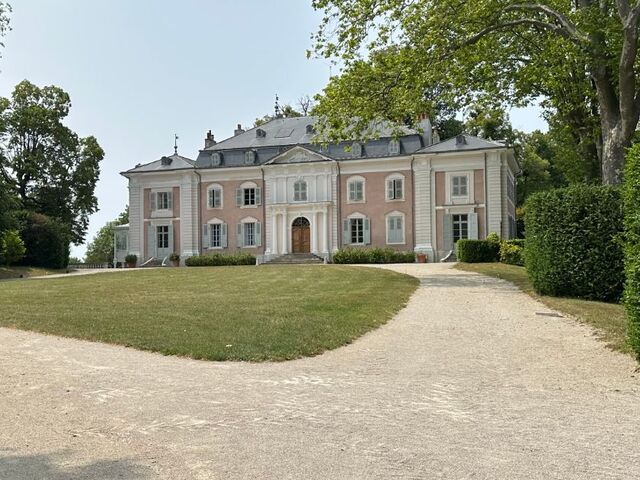
The Château de Voltaire in Ferney
In 1758, aged 64, François-Marie Arouet, known as Voltaire, bought the Ferney estate, just outside Geneva. He lived there for nearly twenty years, wrote some of his most famous works there and fought great legal battles in the name of tolerance and justice.
Celebrated in his lifetime by visitors from all over Europe, he was glorified after his death in 1778, up to his entry into the Panthéon in 1791. Successive owners then transformed the house and kept alive the cult of the great man.
Today’s visitors discover an estate shaped by the 18th and 19th centuries: at once a château, a writer’s house and a place of memory.
Voltaire in key dates
- 1694
François-Marie Arouet, son of a notary, is born in Paris on 21 November.
- 1704
He studies with the Jesuits at the Collège Louis-le-Grand, where he falls in love with literature and theatre.
- 1717
Imprisoned in the Bastille for almost a year for satirical verses; he then takes the name Voltaire and triumphs with his tragedy Oedipus in 1718.
- 1726
Exile in England: he discovers Newton, Locke and English liberty, which he celebrates in the Philosophical Letters (1734).
- 1734
At Cirey, with Émilie du Châtelet, he shares fifteen years of study, science and writing.
- 1750
Invited by Frederick II of Prussia to Potsdam, he stays almost three years before falling out with the king.
- 1755
He settles at Les Délices in Geneva, then seeks more freedom just across the border.
- 1758
He buys the Ferney estate; Candide appears the following year, in 1759.
- 1762
The Calas affair begins: he publishes the Treatise on Tolerance (1763) and wins the rehabilitation of the Protestant Jean Calas in 1765.
- 1778
A triumphant return to Paris in February; he dies there on 30 May, aged 83.
- 1791
His remains are moved to the Panthéon: the Revolution honours the champion of liberty.
Voltaire in his own words
“We must cultivate our garden.”
“Work keeps at bay three great evils: boredom, vice and need.”
“The best is the enemy of the good.”
“The superfluous, a very necessary thing.”
“I have done a little good; that is my best work.”
A famous quote… that isn’t his
“I disapprove of what you say, but I will defend to the death your right to say it” was not written by Voltaire. His English biographer Evelyn Beatrice Hall wrote it in 1906 to sum up his attitude. Sylvie has many stories like this one to share during the tour!
Meet Voltaire at home
The best way to know Voltaire is to visit his house and gardens with an accredited guide.